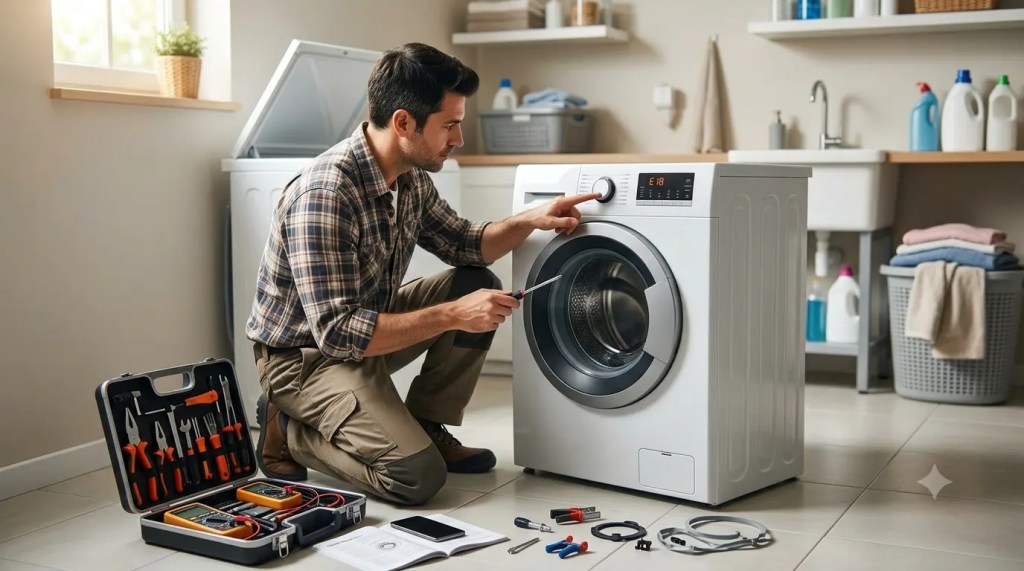
Not every washing machine problem needs a technician. Plenty of the issues that send people reaching for the phone- a machine that won’t start, won’t drain, or leaves clothes soaking wet- come down to simple causes you can fix yourself in fifteen minutes with tools you probably already own. Here’s a practical, problem-by-problem guide to troubleshooting your washing machine before you call in professional help.
Before You Start: A Few Safety Basics
Always unplug the machine before opening any panel or reaching near the pump, drum, or electrical components. If your machine is hardwired rather than plugged in, switch off the breaker instead. Keep a towel or shallow tray nearby, since most drainage-related fixes involve a small amount of standing water escaping when you open a hose or filter.
The Machine Won’t Turn On
This is often the simplest fix of the bunch. Start with the obvious:
- Check that the machine is fully plugged in and the outlet is working (test it with another device)
- Look at your circuit breaker or fuse box for a tripped switch
- Confirm the door or lid is fully closed, since most machines won’t start with an open door safety switch
- Check for a child lock or delay-start setting that might be holding the cycle back
If all of that checks out and the machine still won’t power on, the issue is likely internal: a faulty door switch, control board, or power cord, and that’s where it makes sense to call a technician rather than continue troubleshooting on your own.
The Machine Won’t Drain
Standing water left in the drum after a cycle is one of the most common complaints, and thankfully one of the easiest to diagnose yourself.
Check the drain hose first. Disconnect it from the back of the machine and look for kinks, bends, or blockages. Lint, small fabric fibers, and debris build up inside over time and can restrict flow enough to stop drainage entirely.
Check the drain pump filter next. Most machines have a small access panel near the bottom front. Behind it sits a filter that catches coins, buttons, and lint before they reach the pump. Place a towel underneath, unscrew the filter, clear out anything trapped inside, and screw it back in. This single fix resolves a large share of drainage complaints.
The Machine Won’t Spin
If your clothes come out soaked instead of just damp, a few culprits are worth checking before assuming the worst:
- An unbalanced load is the most common cause. Redistribute clothes evenly around the drum and try again, especially with bulky items like towels or bedding.
- Overloading can also prevent spinning as a built-in safety measure. Reduce the load size and rerun the cycle.
- A worn drive belt can cause the drum to stop spinning even though the motor still runs. If you hear the motor but see no movement, this is likely the cause, and belt replacement is a moderately advanced fix best left to a technician unless you’re comfortable working inside the cabinet.
The Machine Is Making Loud Noises
Different noises point to different causes:
- Banging or thumping usually means an unbalanced load. Pause the cycle and redistribute the clothes.
- Grinding during the spin cycle often points to worn drum bearings, which typically require professional repair.
- Squealing, especially at the start of a spin cycle, is commonly caused by a worn or loose drive belt.
- Clicking or clunking may mean a foreign object like a coin is caught somewhere inside the drum or pump area.
The Machine Is Leaking
Leaks are worth investigating quickly, since standing water near an appliance can cause floor damage over time.
- Check the door seal or gasket on front-load machines for cracks, tears, or trapped debris that prevent a tight seal.
- Inspect the hose connections at both the water supply and drain points for looseness or wear.
- Look underneath the machine for a cracked or disconnected drain hose, which is one of the most common sources of leaks.
The Machine Smells Bad
A musty odor almost always comes down to trapped moisture and residue buildup rather than a mechanical fault, which makes it one of the easiest issues to fix without any tools at all.
- Run an empty hot water cycle with a washing machine cleaner or a cup of white vinegar
- Wipe down the door seal, where moisture and mildew commonly collect
- Leave the door open between washes to let the drum air out
- Clean the detergent drawer, which often holds more residue than people expect
When It’s Time to Call a Professional
DIY troubleshooting can solve a surprising number of washing machine problems, but some issues require more than a quick fix. Call a technician if you’re dealing with:
- Electrical issues involving the control board or wiring
- A failing motor or motor coupling
- Worn drum bearings causing grinding noises
- Persistent problems that return after you’ve already tried the basic fixes above
Attempting these yourself without the right experience can turn a moderate repair into a more expensive one, so knowing when to stop matters as much as knowing where to start.
Summary
A large share of washing machine problems come down to a handful of repeat offenders: a clogged filter, an unbalanced load, a loose hose, or built-up residue. Working through the basics yourself before calling for help can save you both time and money, and in many cases, resolve the issue completely. When a problem points to something mechanical or electrical inside the machine, that’s your cue to bring in a professional rather than risk further damage.
Fix Washing Machine is built around exactly this kind of practical, no-nonsense troubleshooting, helping you figure out what’s actually wrong before you spend a dime on a repair call you might not even need.

