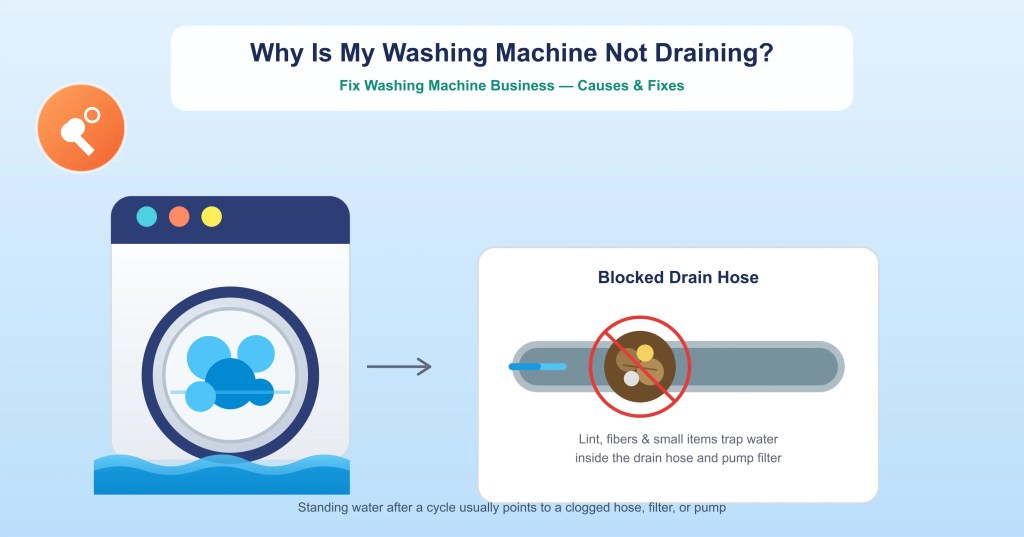
There’s nothing more frustrating than opening your washing machine at the end of a cycle to find it sitting in a pool of dirty water. A washing machine that won’t drain is one of the most common problems homeowners face, but the good news is that it’s often easier to fix than you’d expect. In this guide, we’ll walk you through the most common causes behind drainage problems and how to fix them, step by step.
06 Signs Your Washing Machine Isn’t Draining Properly
Before diving into causes, it helps to recognize the symptoms clearly. You might be dealing with a drainage issue if you notice:
- Standing water left in the drum after a cycle finishes
- Clothes coming out soaking wet instead of just damp
- The machine stopping mid-cycle with an error code related to draining
- Gurgling or humming sounds without water actually leaving the drum
- Water draining very slowly instead of not at all
If any of these sound familiar, one of the causes below is likely the culprit.
1. A Clogged Drain Hose
The drain hose carries wastewater from the machine to your home’s drainage system. Over time, lint, small fabric fibers, coins, tissues, and other debris can build up inside the hose, restricting or completely blocking water flow.
How to fix it: Disconnect the drain hose from the back of the machine (after unplugging the unit) and check for blockages. You can run water through the hose or use a plumber’s snake to clear out any clogs. Also check for kinks or bends in the hose that might be restricting flow, and straighten it out if needed.
2. A Blocked Drain Pump Filter
Most modern washing machines have a small drain pump filter, usually located behind a panel at the bottom front of the machine. This filter catches small items like coins, buttons, hairpins, and lint before they can damage the pump. When it becomes clogged, water simply can’t drain properly.
How to fix it: Locate the filter access panel (check your machine’s manual if you’re unsure where it is), place a shallow tray or towel underneath to catch water, and carefully unscrew the filter. Clean out any debris, then screw it back in securely. This is one of the most common and easiest fixes for drainage issues.
3. A Faulty Drain Pump
If the hose and filter are both clear but your machine still won’t drain, the drain pump itself may be malfunctioning. The pump is responsible for physically pushing water out of the machine, and if its motor burns out or the impeller becomes damaged or jammed, draining will stop working entirely.
Signs of a bad pump include: unusual grinding or buzzing noises during the drain cycle, or complete silence when the machine attempts to drain. In many cases, a faulty pump will need to be replaced rather than repaired, which is a job best handled by a qualified technician.
4. An Overloaded Machine
Overloading your washing machine with too many clothes can throw off the balance of the drum and prevent the drain cycle from functioning correctly. When the load is too heavy or unevenly distributed, the machine may struggle to spin and drain properly as a safety measure.
How to fix it: Reduce the load size and redistribute clothes evenly in the drum. As a general rule, avoid filling the drum more than three-quarters full.
5. Problems With the Lid or Door Switch
Many washing machines won’t complete a drain or spin cycle if the door or lid switch isn’t properly engaged. This is a built-in safety feature, but if the switch itself is faulty, the machine may fail to drain even when the door is closed correctly.
How to fix it: Make sure the door is fully closed and latched. If the machine still won’t drain, the switch itself may need to be tested and potentially replaced by a technician.
6. A Malfunctioning Control Board or Timer
In some cases, drainage issues aren’t mechanical at all; they’re electrical. A faulty control board or timer can fail to send the correct signal to the drain pump, preventing it from activating even though everything else is in working order.
How to fix it: This is a more advanced issue that typically requires professional diagnosis, since it involves testing electrical components rather than physical blockages.
When to Call a Professional
While clogged filters and hoses are easy DIY fixes, some drainage issues point to deeper mechanical or electrical problems. If you’ve checked the hose, filter, and load size and your machine still won’t drain, it’s time to call in a professional technician. Continuing to run a machine with an unresolved draining issue can lead to water damage, mold growth, and further strain on internal components.
Preventing Future Drainage Problems
A few simple habits can help you avoid drainage issues going forward:
- Empty pockets before washing to prevent coins, tissues, and small items from entering the drum
- Clean the drain filter every one to two months
- Avoid overloading the machine
- Periodically inspect the drain hose for kinks or wear
- Run a maintenance or cleaning cycle monthly to prevent buildup
Final Thoughts
A washing machine that won’t drain is almost always caused by one of a few common issues: a clogged filter, blocked hose, overloaded drum, or a mechanical or electrical fault. Working through these causes systematically will help you pinpoint the problem quickly, and in many cases, you’ll be able to fix it yourself without needing to call in professional help. If the issue persists after trying these steps, it’s best to have a technician inspect the machine before the problem leads to more costly damage.

