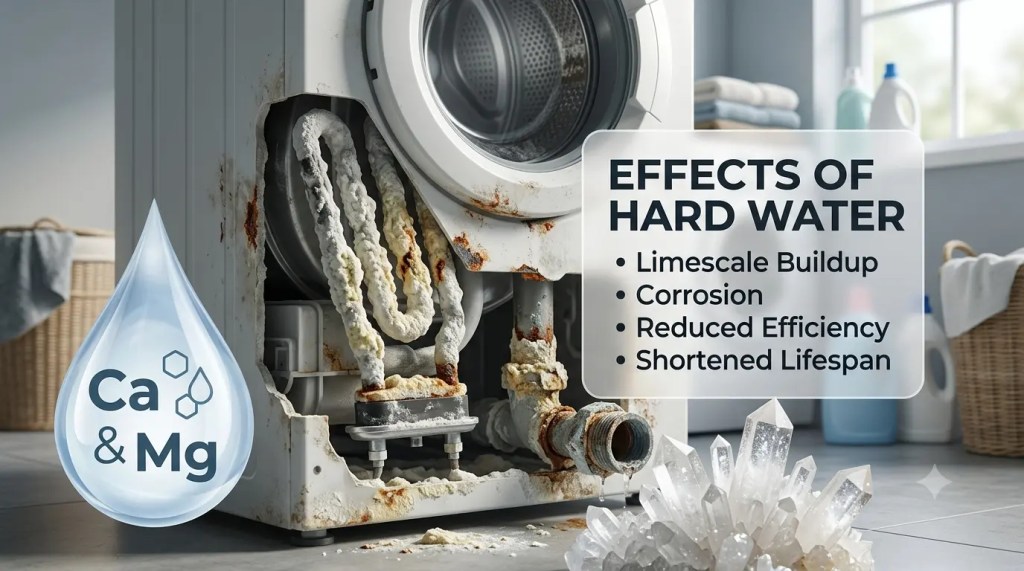
If you’ve noticed your washing machine struggling more than it used to, developing a stubborn white residue, or simply not lasting as long as you expected, hard water could be the hidden culprit. Many homeowners don’t realize just how much water quality impacts appliance performance until they’re already facing frequent breakdowns and costly washing machine repair calls. In this article, we’ll explain what hard water actually does to your washing machine and how you can protect your appliance from its effects.
What Is Hard Water?
Hard water is water that contains a high concentration of dissolved minerals, primarily calcium and magnesium. As this water passes through your washing machine, these minerals don’t simply disappear; they build up over time on internal components, in hoses, and even within the fabric of your clothes.
The severity of hard water varies by region and water source. In many parts of the UAE, including Dubai, desalinated water is generally treated to reduce hardness, but mineral buildup can still occur over time depending on your building’s plumbing system, storage tanks, and local water supply variations.
How Hard Water Damages Your Washing Machine
1. Limescale Buildup Inside the Machine
One of the most direct effects of hard water is limescale, a chalky white mineral deposit that forms inside pipes, hoses, and the drum itself. Over months and years, this buildup can coat heating elements, clog small water passages, and restrict water flow throughout the machine.
Limescale buildup is one of the leading reasons washing machines eventually require professional washing machine repair, since it can affect nearly every water-carrying component inside the unit.
2. Reduced Efficiency of Heating Elements
If your washing machine has a built-in heater for hot water cycles, hard water minerals can coat the heating element the same way they coat a kettle. This buildup acts as an insulating layer, forcing the heater to work harder and longer to reach the desired water temperature.
Over time, this added strain can cause the heating element to overheat, wear out prematurely, or fail altogether, often resulting in an unexpected washing machine repair visit.
3. Clogged Valves and Hoses
Mineral deposits don’t just build up in visible areas; they also accumulate inside water inlet valves and hoses. As these passages narrow due to limescale, water flow into the machine slows down, leading to longer fill times, inconsistent water levels, or error codes related to water supply.
In more severe cases, a completely blocked valve may need replacement, which is a common and often avoidable washing machine repair issue caused directly by prolonged hard water exposure.
4. Reduced Detergent Effectiveness
Hard water reacts with regular detergent, reducing its ability to lather and clean effectively. This often leads homeowners to use more detergent than necessary to compensate, which ironically creates more soap scum residue inside the machine, compounding the buildup problem rather than solving it.
Over time, this combination of mineral deposits and soap residue can clog components and contribute to unpleasant odors inside the drum.
5. Stiff, Dull, or Damaged Clothes
Beyond affecting the machine itself, hard water also impacts your laundry. Minerals can settle into fabric fibers, making clothes feel stiff, look dull, and wear out faster than they would with softer water. Whites may gradually turn gray, and colors can fade more quickly than expected.
6. Shortened Appliance Lifespan
When you combine all of the effects above, restricted water flow, strained heating elements, and internal mineral buildup, it’s clear why washing machines exposed to consistently hard water tend to have shorter lifespans. What might otherwise be a 10-15 year appliance can end up needing major washing machine repair or full replacement significantly earlier.
Signs Your Washing Machine May Be Affected by Hard Water
Watch for these warning signs:
- White, chalky residue around the detergent drawer, drum, or door seal
- Reduced water pressure filling the machine
- Clothes coming out stiffer than usual
- Longer cycle times, especially for hot water washes
- Unusual noises during heating cycles
- Frequent need for washing machine repair on water-related components
How to Protect Your Washing Machine From Hard Water
Use a Water Softener
Installing a water softening system for your home is the most effective long-term solution. It removes calcium and magnesium from the water supply before it ever reaches your washing machine, protecting not just your washer but other water-using appliances as well.
Run Regular Descaling Cycles
Many washing machines benefit from a monthly descaling treatment using a dedicated washing machine cleaner or a natural solution like white vinegar. Running an empty hot cycle with a descaling agent helps dissolve mineral buildup before it accumulates into a bigger problem.
Use the Right Detergent
Detergents formulated for hard water, or adding a water softening additive to your regular detergent, can help reduce mineral interference and improve cleaning performance without needing extra detergent.
Clean the Drum and Seals Regularly
Wiping down the door seal and detergent drawer weekly helps prevent limescale and soap scum from settling into these areas, reducing the risk of buildup-related issues over time.
Schedule Preventive Maintenance
Having a technician inspect your machine periodically can catch early signs of mineral buildup before they turn into major issues. Preventive maintenance is almost always more affordable than emergency washing machine repair caused by long-term neglect.
Final Thoughts
Hard water might seem like a minor inconvenience, but its cumulative effect on your washing machine can lead to reduced performance, higher energy use, and a much shorter appliance lifespan. By recognizing the early warning signs and taking simple preventive steps, like descaling regularly, using the right detergent, and considering a water softener, you can significantly reduce the risk of costly washing machine repair down the line and keep your machine running efficiently for years to come.

