Choosing between a front-load and a top-load washing machine is one of the biggest decisions you’ll make when buying a new appliance. Both types get your clothes clean, but they differ significantly in efficiency, cost, water usage, and long-term maintenance, especially in a climate and water environment like Dubai’s. In this guide, we break down the key differences to help you decide which option fits your household best.
How Front-Load Washing Machines Work
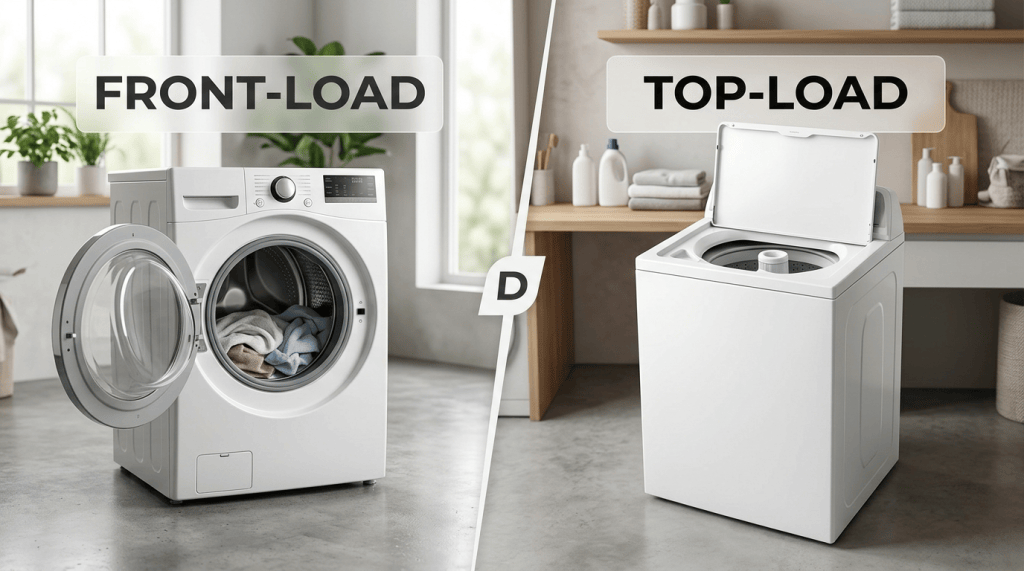
Front-load washing machines have a horizontal drum that rotates on a front-facing axis. Clothes are loaded through a door on the front of the machine, and the drum tumbles them through a small amount of water rather than fully submerging them, using gravity to lift and drop the laundry repeatedly for a thorough clean.
How Top-Load Washing Machines Work
Top-load machines have a vertical drum accessed from the top of the unit. Traditional top-loaders use a central agitator or a wash plate that spins to move clothes through the water, which typically fills the drum more fully than a front-load design.
Water Efficiency
This is one of the most significant differences between the two types. Front-load machines use considerably less water per cycle because they don’t need to fully submerge the load, often using 40-50% less water than a comparable top-load machine.
For Dubai households, where water is desalinated and utility costs can add up, this efficiency translates directly into lower monthly water bills. If reducing water consumption is a priority, front-load machines have a clear advantage.
Energy Efficiency
Front-load washers also tend to be more energy-efficient. Because they use less water, less energy is required to heat that water, and their spin cycles typically extract more moisture from clothes, reducing drying time and energy use if you’re using a dryer afterward.
Top-load machines, particularly older agitator models, generally consume more water and energy per cycle, though newer high-efficiency (HE) top-load models have narrowed this gap considerably.
Cleaning Performance
Front-load machines are widely regarded as gentler on fabrics while still delivering a deep clean, since the tumbling motion mimics the way clothes are cleaned by hand rather than being aggressively agitated. This makes them a strong choice for delicate fabrics and activewear.
Top-load machines with agitators can be tougher on heavily soiled items and larger loads like bedding, but the agitator can also cause more wear on delicate fabrics over time. Newer top-load models without agitators (using an impeller instead) offer a gentler wash while still maintaining the vertical loading design.
Wash Time
One trade-off with front-load machines is cycle length. Because they use less water and rely on tumbling rather than aggressive agitation, cycles often take longer, sometimes significantly longer than a comparable top-load cycle. If speed is a priority for your household, this is worth factoring in.
Price and Upfront Cost
Front-load washing machines generally come with a higher upfront price tag compared to top-load models with similar capacity and features. This is due to their more complex engineering, including better door seals, more sophisticated drum suspension systems, and advanced motor technology.
Top-load machines are typically more budget-friendly upfront, making them an appealing option if initial cost is your primary concern.
Maintenance Considerations
Front-load machines require a bit more maintenance attention. Because the door seals shut tightly to prevent water from leaking out during the wash, moisture can get trapped around the rubber door gasket, leading to mold and odor buildup if not cleaned regularly. Leaving the door open between washes and wiping down the gasket periodically helps prevent this issue.
Top-load machines are generally more ventilated by design, which reduces the risk of trapped moisture and odor buildup, making them somewhat lower-maintenance in this specific regard.
Ease of Use
Top-load machines don’t require bending down to load and unload laundry, which many people find more comfortable, particularly those with back or mobility issues. Front-load machines require bending or kneeling, though this can be offset by installing the unit on a raised pedestal.
On the other hand, front-load machines are stackable with a dryer, making them a space-saving option for smaller homes or apartments, which is a common consideration in many Dubai residences.
Which One Handles Dubai’s Water Conditions Better?
Dubai’s water supply, largely desalinated, tends to have different mineral characteristics than natural groundwater sources found elsewhere. While both machine types can handle this water without major issues, front-load machines’ lower water usage means less exposure to mineral buildup over time, which can modestly extend component life with proper maintenance.
Which Should You Choose?
Choose a front-load washing machine if:
- You want to minimize water and energy bills
- You have limited space and want a stackable washer-dryer setup
- You prioritize gentle care for delicate fabrics
- You’re comfortable with slightly longer wash cycles
- You don’t mind occasional gasket cleaning
Choose a top-load washing machine if:
- You want a lower upfront cost
- You prefer faster wash cycles
- You want easier loading and unloading without bending
- You’re washing heavily soiled items or bulky loads regularly
- You want lower risk of mold and odor buildup
Final Thoughts
There’s no universally “better” choice between front-load and top-load washing machines; it depends on your household’s priorities. If long-term efficiency, water savings, and space-saving design matter most, a front-load machine is likely the better investment. If speed, ease of use, and a lower upfront cost are your priorities, a top-load machine may suit your needs better.
Whichever type you choose, proper maintenance is key to getting the most out of your machine. Regular cleaning, avoiding overloading, and addressing minor issues early will help either type of washing machine perform reliably for years to come.

