A well-maintained washing machine can easily last 12 to 15 years, while a neglected one often struggles to make it past eight. The difference rarely comes down to the brand or how much you paid; it comes down to a handful of habits that either protect the machine’s internal components or slowly wear them down. Here’s what actually extends the life of a washing machine, based on the patterns that separate machines that last from machines that don’t.
Don’t Overload the Drum
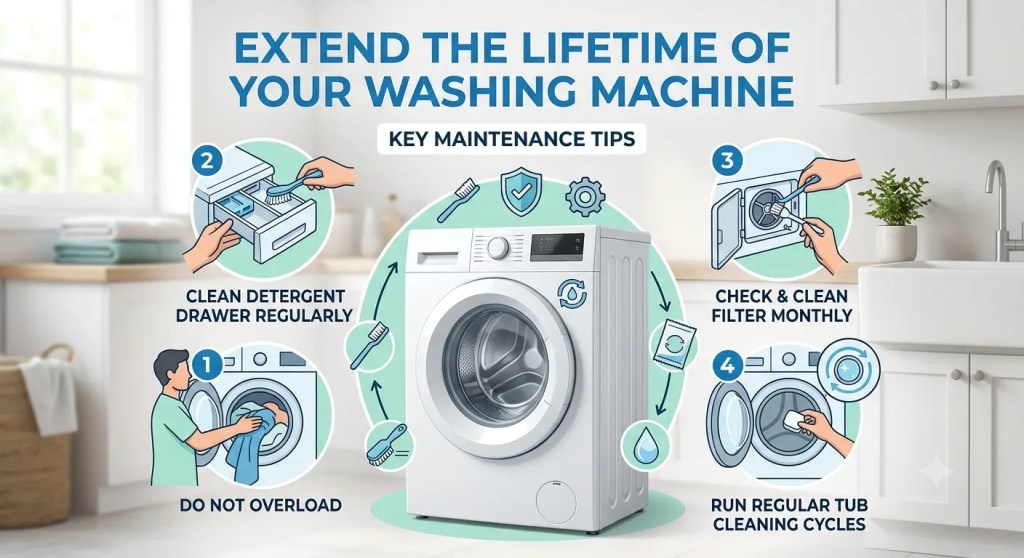
Cramming in one extra towel to avoid a second load is one of the most common ways people shorten their machine’s lifespan without realizing it. Overloading forces the motor, bearings, and suspension system to work harder than they’re designed to, and over time this extra strain accelerates wear on nearly every moving part inside the machine. As a general rule, avoid filling the drum more than three-quarters full, even if it technically still closes.
Use the Right Amount of Detergent
More detergent doesn’t mean cleaner clothes; it usually means more residue left behind in the drum, hoses, and dispenser. That buildup traps moisture, encourages mold growth, and can eventually clog components that are far more expensive to replace than a bottle of detergent. Stick to the manufacturer’s recommended amount, and use high-efficiency detergent if your machine calls for it, since regular detergent creates excess suds in HE machines that residue builds up from over time.
Leave the Door Open Between Washes
Closing the door immediately after a cycle traps humidity inside the drum, creating the ideal environment for mold and mildew to take hold. This is especially true for front-load machines, where the rubber door seal has folds that hold moisture long after the cycle ends. Leaving the door cracked open for a few hours after each wash lets the drum air out and dramatically reduces the musty odors that eventually work their way into your laundry.
Clean the Drum Regularly
Running an empty hot water cycle with a washing machine cleaner or a cup of white vinegar once a month clears out soap scum, mineral deposits, and bacteria before they accumulate into a bigger problem. This single habit does more to prevent long-term buildup than almost anything else you can do, and it takes less effort than most people expect.
Inspect Hoses and Connections Periodically
Water supply hoses and drain hoses degrade over time, developing small cracks or brittleness that eventually lead to leaks. A slow leak that goes unnoticed for months can damage flooring and, in some cases, the machine’s own internal wiring. Check hoses every few months for bulging, discoloration, or stiffness, and replace them proactively, ideally every five years, rather than waiting for a failure.
Keep the Machine Level
An unlevel washing machine vibrates excessively during the spin cycle, and that constant shaking puts unnecessary strain on the suspension system, drum bearings, and even the cabinet frame over time. Use a level tool to check that your machine sits evenly on the floor, and adjust the feet as needed. A machine that “walks” during spin cycles is wearing itself down faster than it should.
Clean the Drain Filter and Pump Area
Lint, hair, coins, and small debris collect in the drain pump filter over months of regular use. Left unchecked, this buildup restricts water flow and forces the pump to work harder, which shortens its lifespan considerably. Cleaning this filter every one to two months, a five-minute job on most machines, prevents one of the most common causes of premature pump failure.
Address Small Problems Immediately
A minor issue ignored for months rarely stays minor. A slightly loose belt, a small leak, or an unusual noise during spin cycles are all early warning signs that something needs attention. Fixing these problems while they’re still small and inexpensive prevents them from cascading into larger failures that damage multiple components at once. Waiting until a machine stops working entirely almost always turns a simple fix into a far more expensive washing machine fix.
Protect Against Hard Water
Mineral buildup from hard water coats heating elements, narrows water passages, and reduces overall efficiency over time. If your area deals with harder water, running more frequent descaling cycles or installing a water softener can meaningfully extend the life of internal components, particularly the heating element and water valves, which are among the most expensive parts to replace.
Schedule Annual Professional Maintenance
Even with consistent at-home care, some components benefit from a professional inspection once a year. A technician can catch early bearing wear, check valve condition, and test safety switches, issues that aren’t always visible during routine cleaning but can lead to a costly washing machine repair if left unaddressed.
Why These Habits Matter More Than Brand or Price
It’s tempting to assume a more expensive machine will simply last longer regardless of how it’s treated, but in practice, maintenance habits matter more than the price tag on the box. A mid-range machine that’s cared for consistently will often outlast a premium model that’s overloaded, rarely cleaned, and left to develop small leaks unnoticed. The machine’s design sets its potential lifespan, but how it’s treated determines whether it actually reaches that number.
Summary
Extending your washing machine’s lifespan comes down to a handful of consistent habits: avoiding overloading, using the right detergent amount, keeping the drum clean, and addressing small issues before they grow into expensive repairs. None of these individually take much effort, but together they make the difference between a machine that lasts eight years and one that comfortably reaches fifteen. Fix Washing Machine is here to help you build that routine, with practical guidance for keeping your appliance running smoothly for as long as possible.

